Method, materials & detail
The proper standard —
explained.
Jet washing is the easiest job to do badly. The difference between a transformation and a disappointment is equipment selection, pressure control, and knowing when softwashing should be doing some of the work instead.
Rotary surface cleaning
Driveways and patios are cleaned with a rotary surface cleaner where appropriate — twin jets spinning at constant speed under a shroud, giving a consistent overlap pattern. This is what eliminates the zebra-stripe look hand-held lances leave behind.
Detail lance work
Edges, kerbs, steps, drain rims, brick risers, garden walls and steps are detailed with a lance after the main surface clean. Without this, the 'finished' area still reads as patchy from above.
Surface-specific approach
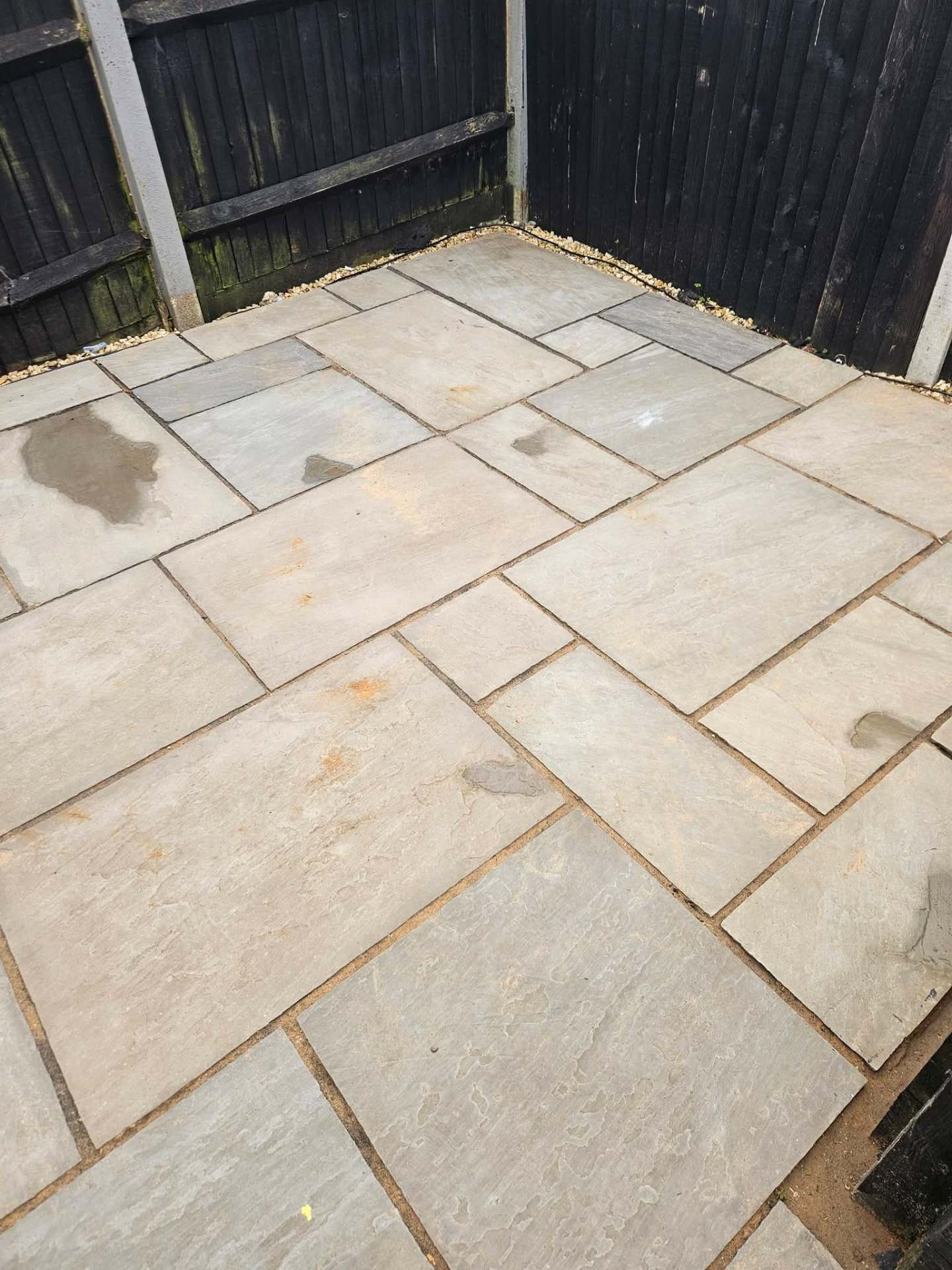
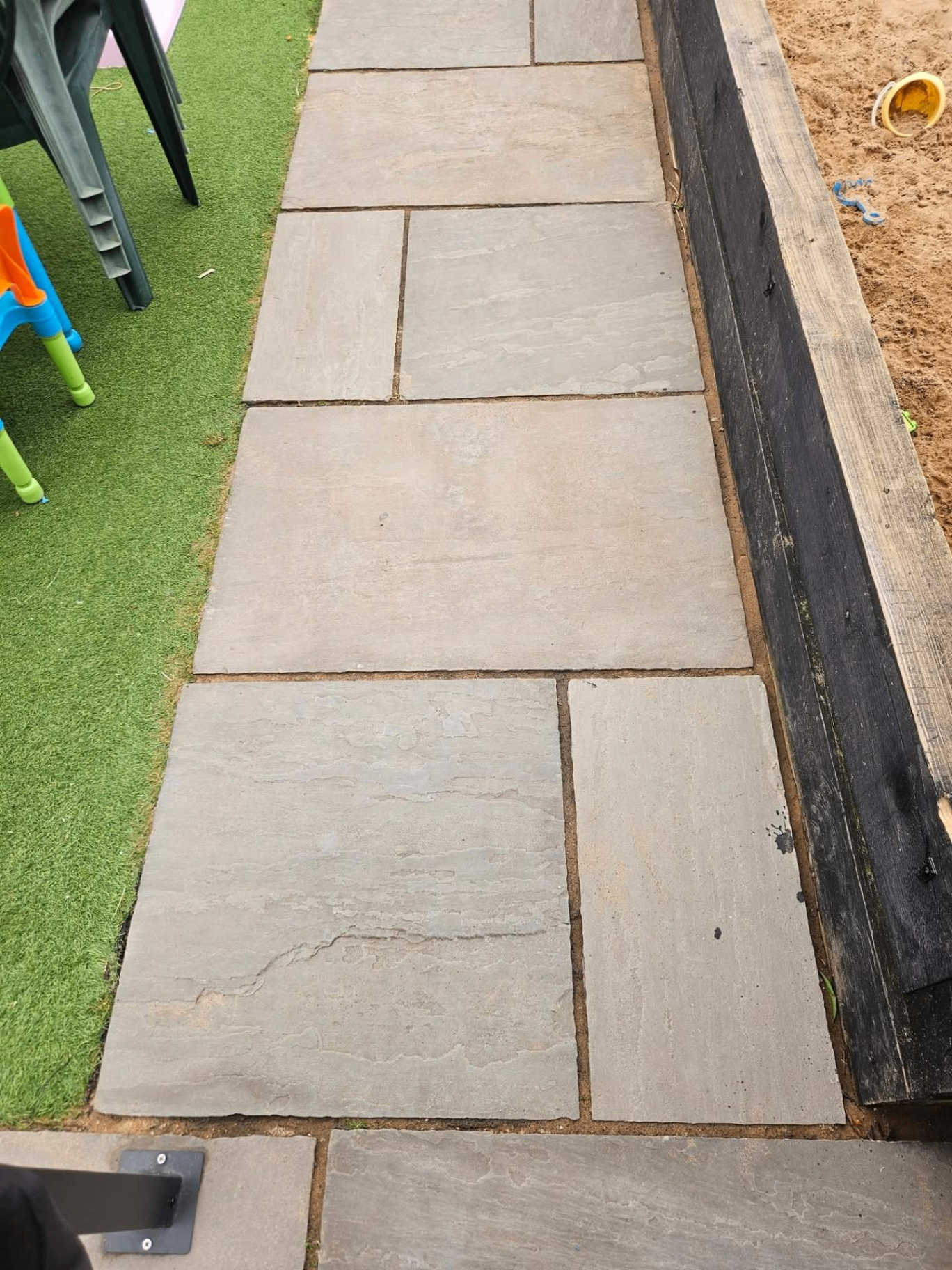
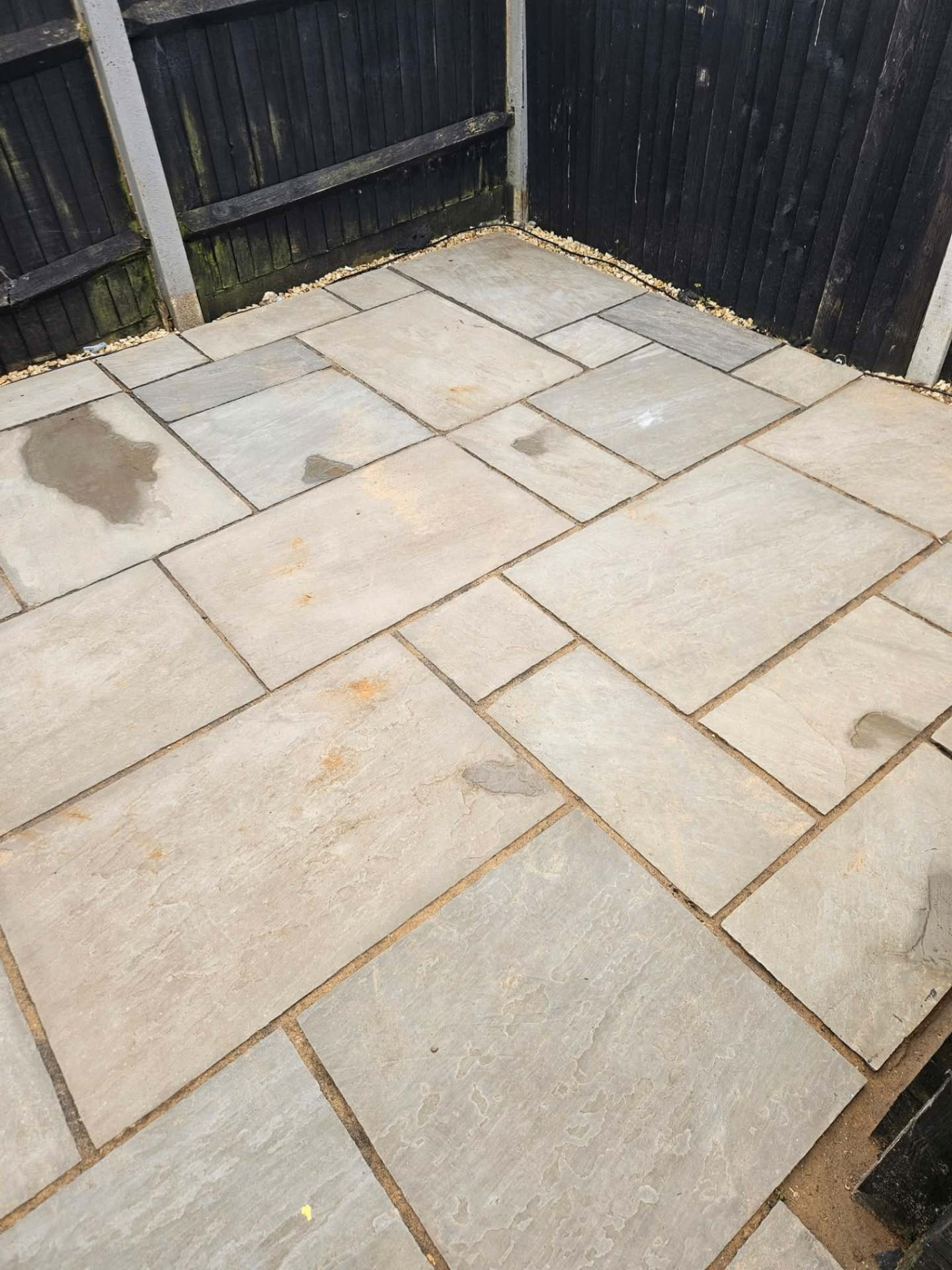
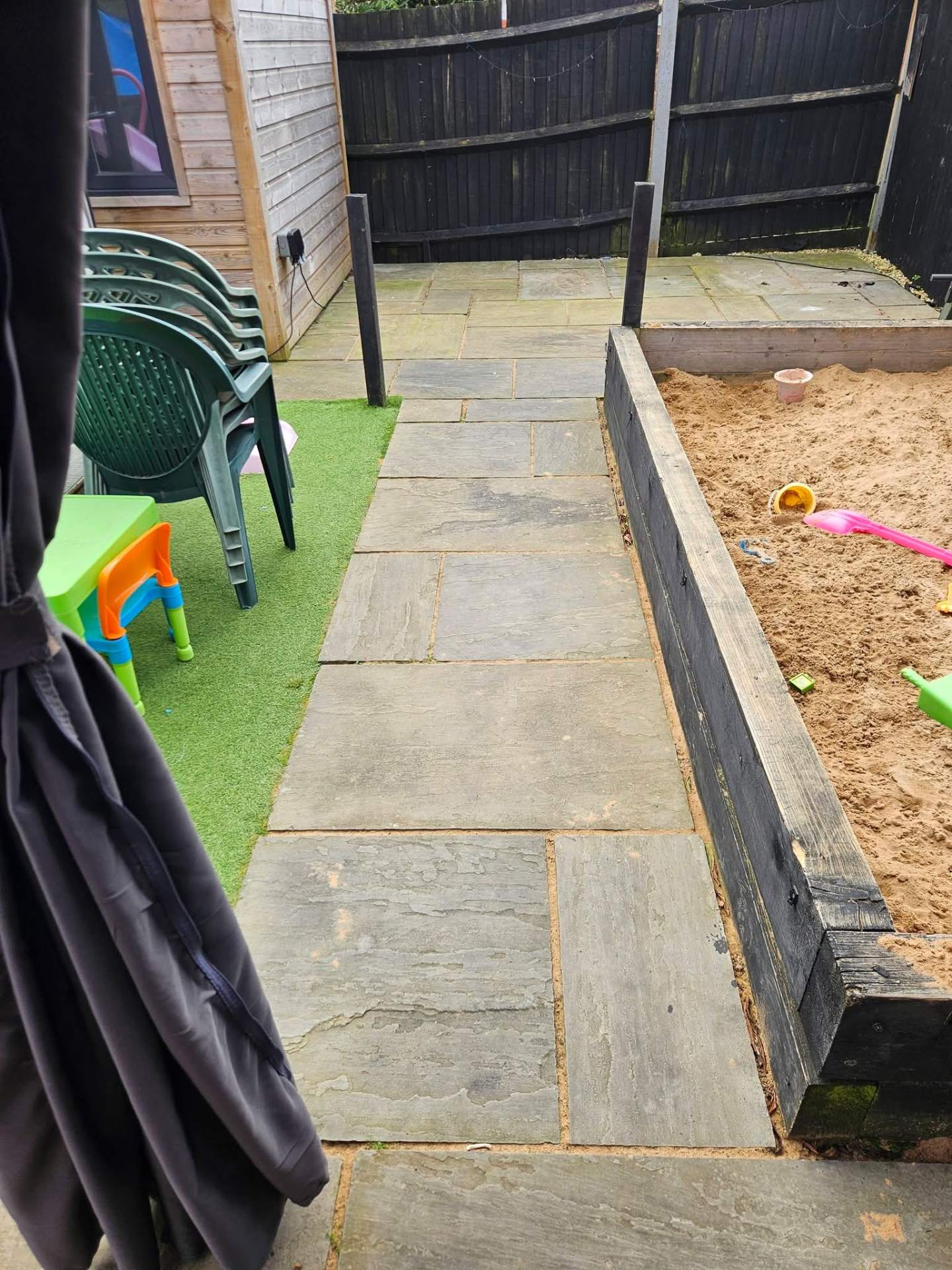
Block paving, Indian sandstone, slate, concrete, imprinted concrete and limestone all behave differently under pressure. A test panel is run first to confirm the right setting on your specific surface.
When to add softwashing
Where the staining is biological (green/black algae and moss), pressure washing alone is a short-term fix. Adding a low-pressure biocide treatment afterwards kills the organism and extends the result by years. Quoted as an optional add-on.
Re-sanding excluded
Re-sanding of block-paving joints is intentionally not included in the service. Where re-sanding is needed, it's flagged on the quote so you can arrange a specialist separately.
Residential vs commercial
Residential pricing starts at £5/m² with an £80 minimum job value. Commercial work (forecourts, yards, car parks) is quoted bespoke with RAMS and method statements as standard.